
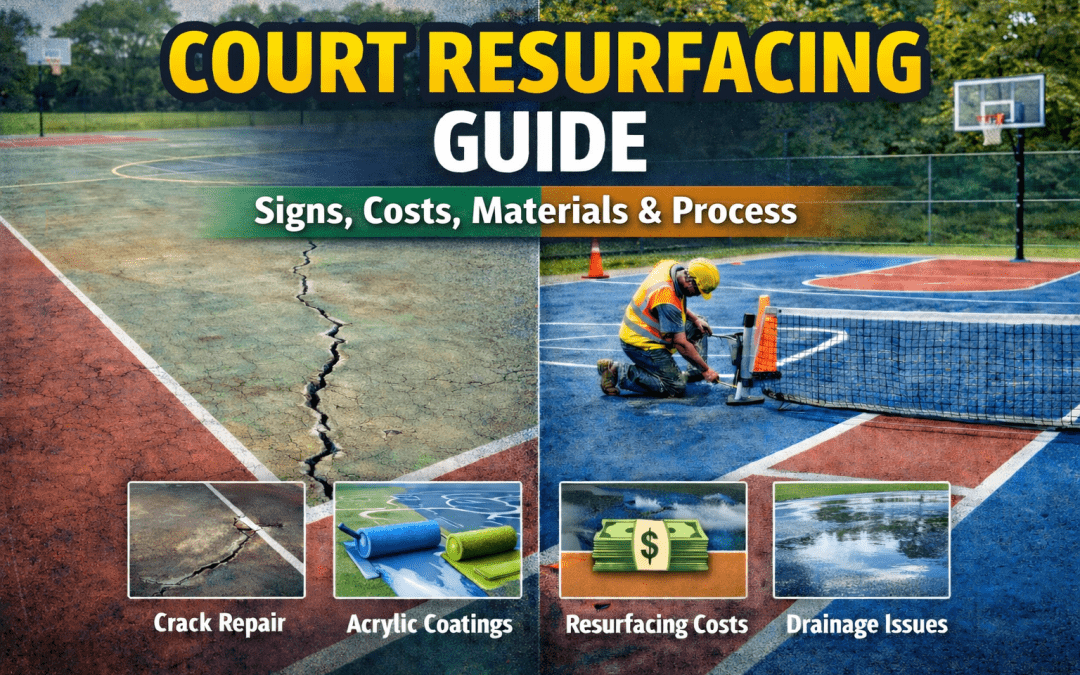
In this guide, we’ll walk you through the signs that indicate it’s time for resurfacing, the materials used, costs involved, and the step-by-step process. With this knowledge, you can ensure your sports courts are safe, durable, and appealing through sports surface maintenance and resurfacing. Proper court maintenance not only extends the life of the facility but also enhances its usability and attractiveness, encouraging more community engagement and active participation in sports and physical activities.
 Keeping an eye on the condition of your sports courts is vital. Regular inspections can help identify issues before they become severe, saving time and money in the long run. Here are some common indicators that your court may need resurfacing:
Cracks and Surface Damage
Cracks are the most apparent sign of surface degradation. Over time, weather conditions and frequent use can cause cracks to appear, which not only look unsightly but can also pose safety hazards. Addressing these early with resurfacing can prevent more extensive damage with professional court crack repair services. Cracks can lead to uneven surfaces that disrupt gameplay and increase the likelihood of accidents, making it crucial to tackle them promptly.
Fading and Discoloration
Exposure to the sun and elements can lead to fading and discoloration of the court surface. While this may seem cosmetic, it can also affect the playability and performance of the court. Resurfacing sport surfaces with good quality paints can restore the court’s vibrant color and ensure better visibility for players. A well-maintained surface not only looks appealing but also helps in maintaining consistent play conditions, which is especially important for competitive sports.
Drainage Issues
Poor drainage can lead to water pooling on the court’s surface, which can cause long-term damage and make the court unusable after rain. If you notice persistent water issues, it’s time to consider resurfacing to address these drainage problems. Effective drainage solutions incorporated during resurfacing can significantly enhance the usability of the court, even in wet conditions, ensuring that the facility remains operational more often.
Uneven Surface
An uneven surface can affect the bounce of balls and the footing of players, leading to an unsatisfactory playing experience. Resurfacing can level out the surface, providing a consistent playing area that enhances safety and enjoyment. Even small irregularities can alter the dynamics of a game, making it imperative to maintain a smooth, level playing field for both casual and serious athletes.
Materials Used in Court Resurfacing
 The choice of materials for court resurfacing is crucial to ensure durability and performance. Selecting the right sports court surface materials can significantly influence the longevity and maintenance needs of your court. Here’s a look at some commonly used materials:
Acrylic Court Resurfacing
Acrylic coatings are popular for their durability and vibrant colors. They provide a smooth, non-slip surface ideal for tennis courts and other multi-sport facilities. Acrylic is also resistant to UV rays, ensuring the court maintains its look for years. This material is known for its ease of maintenance and ability to withstand various weather conditions, making it a preferred choice for many facility managers.
Asphalt and Concrete Base
The base of your court plays a significant role in its longevity. Asphalt provides flexibility and is less prone to cracking, making it an excellent choice for regions with temperature fluctuations. Concrete, while more rigid, offers a long-lasting, stable base when properly maintained. Choosing between these options depends on the specific needs of your location and the types of sports the court will accommodate.
Synthetic Options
For those looking for additional cushioning and performance, synthetic materials like polyurethane or rubberized surfaces can be considered. These options are particularly popular for running tracks and multi-purpose courts, providing extra comfort for athletes. Synthetic surfaces can also offer enhanced durability and reduced maintenance needs, which can be a significant advantage for high-traffic areas.
Costs of Court Resurfacing
Understanding the costs involved in resurfacing is essential for budgeting and planning. Accurate cost estimation using a sports court cost estimator helps in allocating resources effectively and ensures that the resurfacing project aligns with financial expectations.
Factors Affecting Cost of Court Resurfacing
- Size of the Court: Larger courts naturally incur higher costs due to the increased amount of materials and labor required. The scope of the project will directly influence the overall expenses.
- Extent of Damage: Courts with extensive cracking or drainage issues may require more intensive repair work, influencing the cost. Addressing these issues during resurfacing can prevent future costly repairs.
- Material Choice: Premium materials like synthetic surfaces will cost more than basic acrylic coatings. The choice between long-term durability and initial cost should align with your facility’s goals and budget.
Estimating the Cost of Court Resurfacing
Obtaining quotes from multiple contractors can help you get a better understanding of potential costs for your specific project. Comparing quotes and assessing contractor expertise can ensure you receive quality work within your budget, providing value for your investment.
The Court Resurfacing Process
Resurfacing a sport surface court involves several essential steps to ensure the finished product is both functional and aesthetically pleasing. Each phase of the process is critical in achieving a high-quality surface that meets the demands of various sports and activities.
Inspection and Preparation
A thorough inspection identifies all areas needing attention, from cracks to drainage issues. The preparation phase involves cleaning the court and addressing any structural repairs needed before the new surface is applied. This step ensures that the new surface adheres properly and performs as expected, providing a solid foundation for the subsequent layers.
Crack Repair
Cracks are repaired using specialized fillers and compounds designed for flexibility and durability. This step is crucial to prevent the cracks from reappearing and to ensure a smooth surface. Proper crack repair not only enhances the court’s appearance but also extends the life of the resurfacing, reducing the need for frequent maintenance.
Surface Application
Once repairs are complete, the chosen surfacing material is applied in layers. This process often includes multiple coats to build up the surface, each requiring time to cure properly. The result is a smooth, even playing surface. This meticulous application process ensures that the court meets the specific performance and aesthetic standards required for its intended use.
Line Marking and Finishing Touches
After the surface has cured, lines are painted according to the specific sports requirements. Additional finishing touches, such as adding nets or other equipment, complete the process. Proper line marking is essential for defining play areas and ensuring the court is ready for competitive play, enhancing the overall functionality of the facility.
Benefits of Court Resurfacing
Investing in court resurfacing offers numerous benefits, enhancing both the functionality and appeal of your sports facilities. A well-maintained court can serve as a community hub, encouraging regular use and promoting healthy lifestyles.
- Improved Safety: A newly resurfaced court reduces the risk of injuries by providing a stable, even surface. This is particularly important for schools and community centers where safety is a top priority.
- Enhanced Appearance: Fresh coatings restore the court’s vibrant appearance, boosting its visual appeal. A well-kept facility attracts more users, increasing community engagement and satisfaction.
- Extended Lifespan: Regular maintenance and resurfacing extend the life of the court, offering long-term value for your investment. Investing in quality resurfacing reduces future repair costs and ensures the court remains a valuable asset for years to come.
Conclusion
Court resurfacing is a vital aspect of maintaining and enhancing sports facilities. By recognizing the signs of wear, understanding the materials and costs involved, and following the correct process, you can ensure your sport surfaces remain in top condition. Proper court maintenance not only preserves the court’s integrity but also enhances user experience and satisfaction.
Whether you’re a school administrator, community recreation manager, or property developer, investing in quality court resurfacing can greatly enhance the appeal and functionality of your recreational spaces. By providing safe, durable, and visually appealing courts, you contribute to your community — contact Sports Surfaces for resurfacing help and a consultation. These investments create lasting value, supporting active lifestyles and fostering community spirit.