
How Long Does a Tennis Court Last Before Resurfacing
Creating a well-maintained tennis court is akin to crafting a masterpiece that serves both aesthetic and functional purposes. However, as with any outdoor recreational space, a tennis court’s longevity is a matter of proper care, climate considerations, and regular maintenance. In this article, we will delve into the factors that influence a tennis court’s lifespan and provide guidance on when and how to resurface to ensure it remains a vibrant part of your facility.
 A tennis court is more than just a flat surface—it’s a complex structure designed to meet specific performance and safety standards. The lifespan of a tennis court before it needs resurfacing can vary greatly depending on several factors, including the type of court surface, usage frequency, and environmental conditions.
Types of Tennis Court Surfaces
The type of surface you choose for your tennis court plays a significant role in its durability. Here are the primary types:
- Hard Courts: Made from asphalt or concrete, these are coated with an acrylic surface. They are popular for their low maintenance and consistent bounce. Typically, hard courts need resurfacing every 4 to 8 years.
- Clay Courts: Known for their slower play and softer surface, clay courts require more frequent maintenance. Resurfacing might be necessary every 2 to 3 years.
- Grass Courts: Offering a classic feel, grass courts demand daily care and are generally resurfaced annually.
- Synthetic Courts: These mimic the properties of natural surfaces and usually require resurfacing every 5 to 7 years.
Environmental Factors
 The environment significantly affects the condition and lifespan of a tennis court. Factors such as sun exposure, rainfall, and temperature fluctuations can lead to surface deterioration. For example, UV rays can cause surface fading and cracking, while excessive moisture can lead to sub-surface damage.
Usage and Maintenance
How frequently the court is used and how well it is maintained also play crucial roles in its longevity. A court that hosts daily matches will wear out faster than one used occasionally. Regular maintenance, such as cleaning, repairing minor damages, and checking drainage systems, can extend the court’s lifespan.
When to Resurface Your Tennis Court for Better Lifespan
Knowing when to resurface a tennis court is key to preserving its quality and performance. Here are some signs that resurfacing might be due:
Visible Cracks and Fading
Cracks are not just an eyesore; they can affect the safety and playability of the court. Fading color indicates that the surface’s protective coatings are wearing thin, which can lead to further damage.
Uneven Surface
An uneven playing surface can disrupt the game and increase the risk of injury. If you notice dips or bulges, it might be time to consider resurfacing.
Slippery Conditions
A slippery court surface can be dangerous. If the court doesn’t drain well or becomes slick when wet, resurfacing can restore its traction.
The Process for Better Tennis Court Resurfacing
Resurfacing a tennis court involves several steps designed to restore its appearance and functionality. Here’s a brief overview:
Assessment and Preparation
First, the court is thoroughly inspected to assess its condition. Any necessary repairs, such as filling cracks or addressing drainage issues, are completed before resurfacing begins.
Surface Cleaning
The existing surface is cleaned to remove dirt, debris, and any loose materials. This ensures that the new surface layers adhere properly.
Application of New Layers
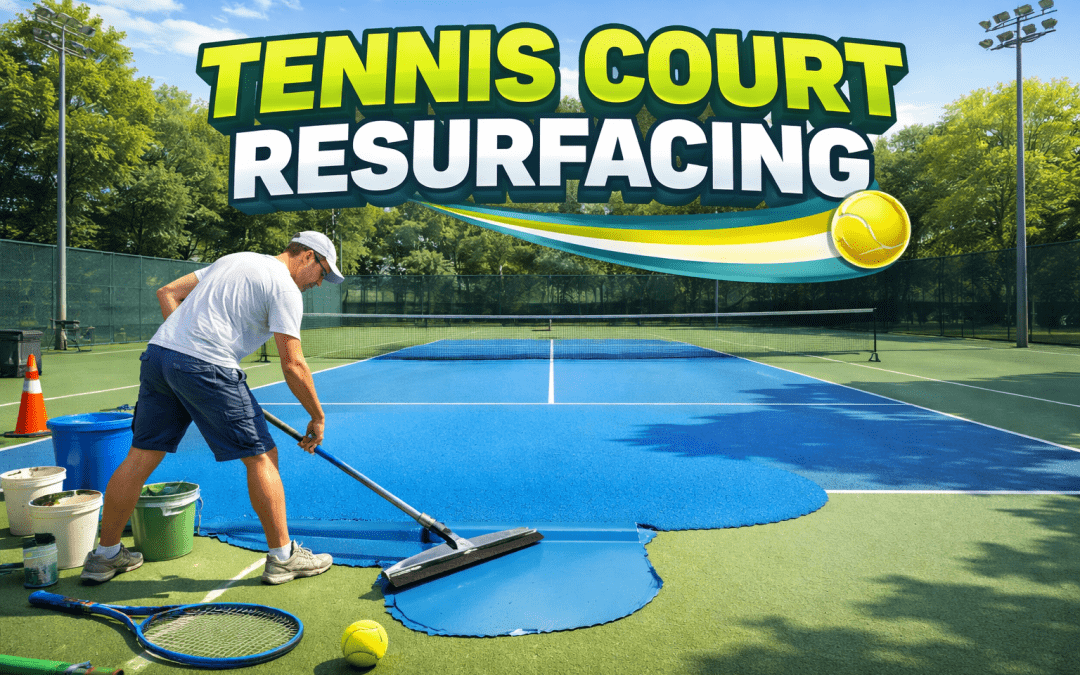
Acrylic resurfacing systems typically involve applying multiple layers. The base layer evens out the surface, while subsequent layers add color, texture, and playing characteristics.
Curing Time
After resurfacing, the court needs time to cure properly. This usually takes a few days, during which the court should be kept free from traffic and moisture.
Benefits of Regular Resurfacing
Regular resurfacing offers numerous benefits beyond aesthetics:
Enhanced Safety
A well-maintained surface reduces the risk of accidents by providing consistent traction and cushioning.
Improved Playability
Resurfacing restores the court’s playing characteristics, such as bounce and speed, ensuring a fair and enjoyable game.
Increased Longevity
Regular maintenance and resurfacing can significantly extend the life of your tennis court, protecting your investment.
Conclusion
Investing in the regular care and resurfacing of your tennis court ensures it remains a valuable asset to your community or property. By understanding the factors that influence a court’s lifespan and recognizing the signs of wear, you can schedule timely resurfacing and enjoy a safe, visually appealing, and high-performing playing environment for years to come.
Whether you’re a school administrator aiming to improve student engagement, a community recreation manager focused on upgrading public facilities, or a property developer looking to enhance your project’s appeal, maintaining a top-notch tennis court is an essential step toward achieving your goals.