
Running Track Construction & Resurfacing: Materials, Costs & Maintenance
A new running track at the local high school looks simple, but running track construction costs can be of different ranges. What makes one cost three times as much as another? The answer is hidden completely underground. You wouldn’t build a valuable house on a shaky foundation, and the same principle applies to an all-weather running track installation. The colorful rubber surface is only as good as the engineered layers beneath it, which form the bulk of the project’s cost.
This hidden foundation starts with a compacted stone sub-base that delivers long-term stability. Above it sits a smooth, precisely sloped asphalt layer that creates the base for the final surface. Together, these layers explain why running track construction costs go far beyond the visible topcoat. Without this two-part system, the track would quickly warp, crack, and fail.
The most critical “insurance policy” for the structure is the running track drainage system. Like gutters protect a home, proper drainage prevents water from collecting beneath the asphalt. When water freezes, it expands and causes bubbling, cracking, and structural damage. These upfront drainage investments often prevent costly repairs within just a few seasons.

Running Track Construction Costs by Surface Type: Latex vs. Polyurethane
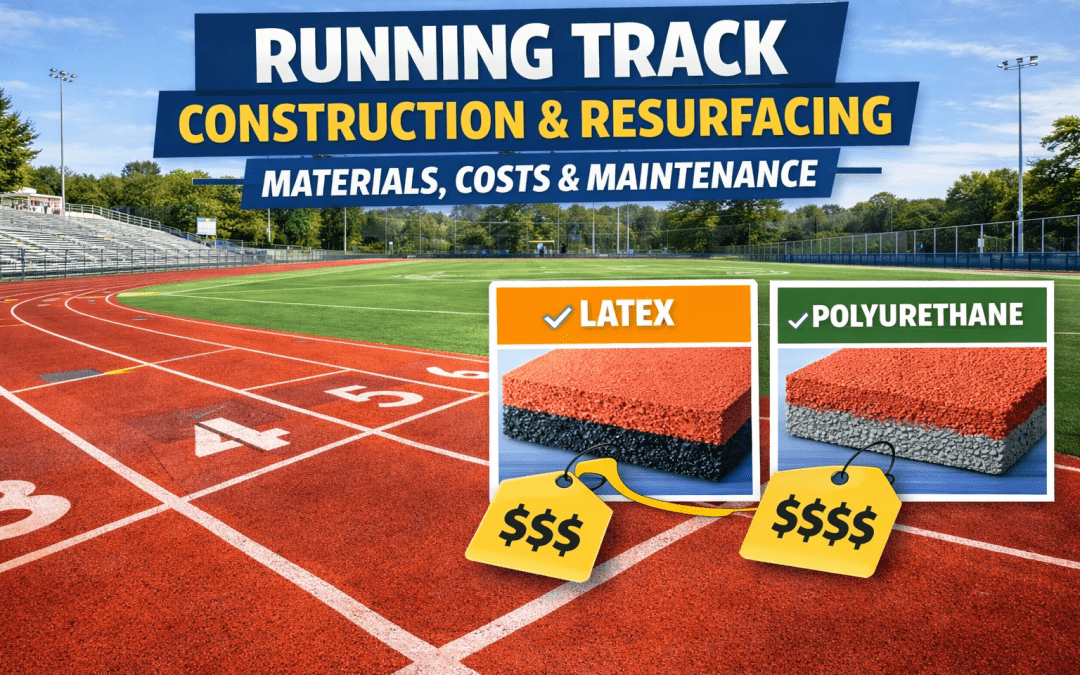
The biggest factor influencing running track construction costs isn’t excavation — it’s the surface material itself. Choosing between latex and polyurethane is like choosing roofing materials: some cost less upfront, while others last much longer. The same principle applies here, with the two most common choices being a latex “structural spray” system or a premium polyurethane “full-pour” system.
Latex structural spray systems are the most affordable option for schools and public parks. They use a rubber base mat with layered latex and sand coatings. This surface works well for general use but has the shortest lifespan.
Polyurethane systems raise running track construction costs upfront but deliver superior performance. Instead of thin coatings, crews pour a thick, seamless rubber layer on-site. These surfaces offer better shock absorption and withstand heavy use for many years.
So, how do these choices affect running track construction costs in real terms? The decision comes down to a clear trade-off between upfront investment and long-term value.
- Latex (Structural Spray): A lower upfront cost, typically around $15-$20 per square foot for the surface. However, it has a shorter lifespan of 5-8 years before needing a major resurfacing.
- Polyurethane (Full-Pour): A significantly higher upfront cost, often $35-$50+ per square foot. In exchange, you get a superior surface that lasts 12-15 years or more, saving on replacement costs down the road.
(The costs mentioned are just an approximate. You can contact Sport Surfaces for knowing the actual pricing.)
Resurface or Rebuild? How to Know When a Track Needs a Facelift vs. Major Surgery
After a track’s surface reaches the end of its 8-to-15-year lifespan, you face a critical decision: can you get away with a simple resurfacing, or do you need a full-scale rebuild? Think of it as the difference between getting a fresh coat of paint versus tearing down a wall. Resurfacing is only an option if the asphalt foundation underneath is still stable, smooth, and free of major cracks.
The appeal of resurfacing lies in its impact on running track construction costs — it’s often 40–60% cheaper than full reconstruction. However, this is a huge gamble if the base is failing. Applying a new polyurethane or latex topcoat over a crumbling foundation is like slapping new shingles on a rotten roof. The underlying problems—cracks, sinking, and shifting—will quickly telegraph through the new surface, wasting the entire investment within a couple of seasons. Learn why running track resurfacing fails and how to fix It.
Standing water is the clearest warning sign of base failure. If puddles remain hours after rain, the asphalt has developed low spots. In these cases, resurfacing won’t work, and a full rebuild becomes necessary.
Hidden Factors That Increase Running Track Construction Costs
Running track construction costs often extend far beyond the surface itself. Fencing, seating, and lighting are major line items that significantly increase budgets. Lighting alone can add six figures to a project.
Similarly, incorporating areas for field events adds another layer to running track construction costs. A simple grass infield is one thing, but adding dedicated runways for long jump, pits for pole vault, and concrete pads for shot put requires specialized construction. The cost to add field event areas can tack on tens of thousands of dollars, as each requires its own unique base preparation, surfacing, and equipment.
Finally, the facility’s intended use plays a huge role in the final bill. A recreational park track has different standards than one built to host championships. The strict 400m running track specifications and price increase significantly when adhering to the precise measurement and marking rules required for official certification. This ensures every race is fair, but that level of precision comes at a premium, turning a construction project into a certified athletic venue.

How to Make a Smart Investment: Thinking in “Total Cost of Ownership”
A running track is a major community investment where the hidden components—from the sub-base to the drainage system—are as critical as the visible surface. This perspective shifts the focus from finding the cheapest upfront option to identifying the best long-term value, or “total cost of ownership.”
The math clearly illustrates this principle. A $700,000 track lasting seven years costs a community $100,000 per year. In contrast, a more durable $1.1 million track lasting fifteen years costs roughly $73,000 annually, proving to be the more affordable choice over time.
When evaluating a new track project, asking two powerful questions can reveal the true cost: “What is the expected lifespan of this surface?” and “What is the estimated annual maintenance pricing?” Answering these questions ensures the final decision is based on sustainable value, resulting in a durable facility built for long-term community use.